
Share This
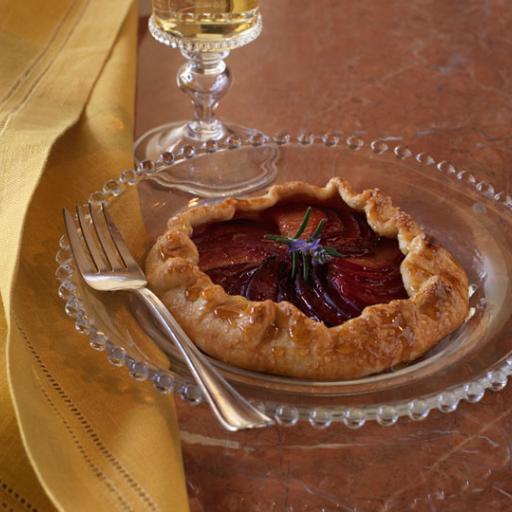
There's something so charming about a crostada. It's a free-form, rustic little pastry that feels effortless yet completely elegant, and once you make one, you'll wonder why you ever bothered with pie crust rings and fluted edges. These plum crostadas are the perfect example. Sweet, juicy plums are nestled inside a buttery cornmeal crust that turns golden and just a little bit crisp in the oven, giving you the kind of dessert that feels equally at home on a picnic blanket or a dinner party table.
What really sets this recipe apart is the rosemary syrup drizzled over the top just before serving. Made with white wine, balsamic vinegar, sugar, and a sprig of fresh rosemary, it adds a beautifully aromatic, herbaceous finish that plays off the natural sweetness of the plums in the most unexpected way. Pour yourself a glass of your favorite Kendall-Jackson wine, take your time in the kitchen, and get ready to fall in love with one of the most charming (and easiest) desserts around.
What is a Crostada?
A crostada (sometimes spelled crostata) is a traditional Italian free-form tart with roots dating back centuries in Italian home kitchens. Unlike a pie, which is baked in a dish with a defined shape, or a formal tart, which relies on a fluted pan and precise edges, a crostada is rolled out flat, topped with fruit or jam, and finished by folding the edges of the dough up and over the filling. That imperfect, rustic look is exactly what makes it so beloved.
These little tarts are the definition of a low-stress dessert. Since the recipe makes six individual crostadas, there's no slicing, no serving, and no fighting over who gets the biggest piece. Everyone at the table just gets their own perfect little tart, which is honestly half the charm.
They're also incredibly flexible. Serve them warm with a scoop of ice cream, at room temperature at a picnic, or make the dough and syrup a day ahead and pull everything together in minutes when guests arrive. It's the kind of dessert that fits any occasion without ever feeling out of place.
Crostada vs. Galette: What's the Difference?
Crostadas and galettes are essentially cousins in the world of rustic tarts. Both are free-form, both skip the fancy pan, and both let the fruit do most of the work. The key difference comes down to where they come from and the small details in the dough.
A crostada is Italian and often features cornmeal in the crust (like this recipe), which gives it a subtle crunch, a golden color, and a slightly nutty flavor. A galette is French and typically uses a straight all-butter pastry that leans buttery and flaky. Fillings for both can range from fruit to jam to savory options, but the traditions behind each give them their own distinct personality.
The good news? You really can't go wrong with either one. They're both easy, beautiful, and endlessly adaptable, which is exactly why home cooks have loved them for generations.
Key Ingredients
The magic of these crostadas is that the ingredient list is simple, but every element plays a specific role in creating that perfect balance of buttery crust, jammy fruit, and aromatic syrup. Here's what you'll need and why.
For the Cornmeal Pastry Dough:
- All-purpose flour: The base of the dough. Provides structure without weighing everything down.
- Cornmeal: The special ingredient that gives this crust its signature subtle crunch and gorgeous golden color.
- Kosher salt: A small but essential detail that sharpens the flavors and balances the sweetness.
- Cold unsalted butter: The key to a flaky, tender crust. Cold butter creates little pockets in the dough that turn into flaky layers as it bakes.
- Sour cream: A slightly unexpected addition that keeps the dough tender and adds a subtle tangy note.
- Ice water: Just enough to bring the dough together without warming up the butter.
For the Rosemary Syrup:
- Sugar: Sweetens the syrup and gives it that glossy, drizzle-worthy finish.
- Dry white wine: Adds depth and a beautiful hint of complexity as it simmers down.
- Balsamic vinegar: A small splash brings acidity and richness that balances the sweetness.
- Fresh rosemary: The star of the syrup. Its piney, aromatic quality is what makes this dessert feel truly special.
- Lemon zest: Brightens the syrup and adds a citrusy layer that pulls all the flavors together.
For the Filling and Finishing Touches:
- Ripe but firm plums: Ripe enough for sweetness, firm enough to hold their shape as they bake. Any plum variety works beautifully.
- Egg: For the egg wash that gives the crust that gorgeous golden shine.
- Raw sugar: A generous sprinkle on top before baking adds sparkle and a satisfying little crunch.
Plum Crostadas Recipe
Recipe Type:
Dessert
Prep Time:
45 minutes
Cook Time:
60 minutes
Total Time:
105 minutes
Servings:
6
Ingredients
Cornmeal Pastry Dough
- 11⁄4 C. all-purpose flour
- 1⁄4 C. cornmeal
- 1⁄2 tsp. kosher salt
- 1⁄2 C. (1 stick) cold unsalted butter, cut into pieces
- 3 Tbs. sour cream
- 4-5 Tbsp. ice water
Syrup
- 1⁄2 C. sugar
- 1⁄2 C. dry white wine
- 1⁄4 C. water
- 1 tsp. balsamic vinegar
- 1 sprig rosemary
- One 1⁄2” wide strip lemon zest
- 1 lb. ripe but firm plums, pitted and cut into 1⁄8” thick slices
- 1 large egg, lightly beaten
- 2 Tbsp. raw sugar
Instructions
For the dough:
- In a food processor, combine the flour, cornmeal, and salt. Pulse until combined.
- Add the butter and pulse until the mixture is crumbly and the butter is the size of small peas.
- Add the sour cream and pulse to combine. Add the water, 1 Tbsp. at a time, and pulse just until the dough begins to form a ball.
- On a lightly floured board, form the dough into a ball, divide into 6 portions, and shape each into a disk.
- Wrap in plastic wrap and refrigerate for 30 minutes.
For the syrup:
- In a small saucepan, combine the sugar, wine, water, vinegar, rosemary, and lemon zest.
- Bring to a boil over medium heat, reduce the heat to a simmer, and cook until reduced and thickened to a syrup, 25-30 minutes.
- Remove from the heat and let cool. Strain through a fine-meshed sieve into a sealable container.
- Preheat the oven to 375°F. Line a baking sheet with parchment paper.
- On a floured board, roll out each pastry disk into a 6” round, about 1⁄4” thick, and place on the prepared pan. Arrange an equal amount of plum slices in concentric circles in the center of each disk, leaving a 1” border. Fold the border over the plums, pleating as you go. Brush each pastry with the egg. Sprinkle each with about 1 tsp. of the raw sugar and bake until the pastry is golden brown, about 30 minutes. Remove from the oven and transfer to wire racks. Let cool completely.
- Arrange the crostadas on a platter or divide among 6 small plates and drizzle with the rosemary syrup. Serve.
Serving Suggestions and Variations
For serving, keep things simple and let the fruit shine. A scoop of vanilla ice cream is a classic pairing that lets the warm pastry and cold cream do their delicious dance. A dollop of freshly whipped cream is equally lovely, or drizzle a little extra rosemary syrup and honey on top for a truly elegant finish. Warm crostadas taste best, but they're also delicious at room temperature the next day.
For inspiration on other stone fruit and rustic desserts, browse the KJ blog:
- Apricot Honey Glazed Plum Galette: A galette-style cousin to this recipe using apricot jam and honey for a sweet, sticky finish.
- Peach Swirl Cheesecake with Pecan Graham Cracker Crust: A rich, celebratory dessert that leans into summer peach season.
- Mango Peach Crepes: Warm roasted fruit spooned over tender crepes for a brunch or dessert moment.
- Almond Layer Cakes with Raspberries and Jam: A charming, individual-sized dessert that would round out any special occasion.
- Bourbon and Spiced Apple Gratin with Sage Whipped Cream: A cozy fall option once plum season winds down, and another example of using fresh herbs in dessert.
What Wine Pairs Best with Plum Crostadas
Since dry white wine is already simmering into the rosemary syrup, Kendall-Jackson Vintner's Reserve Chardonnay is a natural first pour. Its bright acidity and gentle citrus notes echo the flavors already in the syrup while balancing the buttery cornmeal crust and jammy plums.
For a lighter, summery option, Kendall-Jackson Vintner's Reserve Rosé is a lovely alternative. Its delicate strawberry and stone fruit character plays beautifully off the plums and adds a fun, festive feel to a dessert course. And if a proper dessert wine is more the mood, Kendall-Jackson Late Harvest Chardonnay brings honeyed richness and layers of baked fruit that turn each bite of crostada into a special after-dinner moment.