
Share This
St. Patrick’s day is just about here, and even for this guy from the South that means corned beef and cabbage. Chef Andrei has been working on cooking here at the Wine Center for about two weeks, check out what he’s come up with. – Chef Justin.
We celebrate St. Patrick’s Day every year in March, and, it wouldn’t be St. Patty’s without corned beef and cabbage. It is an American tradition to serve this meal on St. Patrick’s Day, started by Irish-Americans in the mid-1800s.
The term “corned beef” comes from ancient times, when refrigeration was nonexistent and people would preserve meat by salting it. Rock salt, about the size of a “kernel” of corn, was used. Beef was placed into crocks and packed with the “corns of salt” to cure over the winter. The cured beef was served at spring celebrations after a long cold winter.
Here at the Wine Center, we like to cure untrimmed whole beef briskets, but sometimes we change it up by using beef tongues instead. The beef brines for 14 days and then it is slow cooked for 3 hours. Both the brisket and tongue are tender and delicious, but the tongue is always a hit.
Below is the recipe that we have used for many years, it was adapted from Alton Brown.
History of Corned Beef and Cabbage in American St. Patrick’s Day Traditions
Corned beef and cabbage became a staple of American St. Patrick’s Day celebrations largely due to the experiences of Irish immigrants in the United States. When large waves of Irish immigrants arrived in the U.S. during the 19th century, they brought with them many aspects of their culture, including their culinary traditions. However, traditional Irish fare often centered around pork and potatoes, as beef was not commonly consumed in Ireland due to its high cost. For many newly arrived Irish immigrants, pork cuts like bacon were an affordable staple, but in America, beef was more widely available and often less expensive in immigrant communities, particularly in cities like New York. The Irish began purchasing brisket, a tougher and cheaper cut of beef, and curing it using salt to preserve it, creating what we know as corned beef.
The pairing of corned beef with cabbage arose from practicality and accessibility, as cabbage was an inexpensive and readily available vegetable. Together, corned beef and cabbage became a hearty, affordable meal that could feed families and even larger social gatherings during celebrations. Over time, this dish became strongly associated with Irish-American identity and was embraced as part of the culinary heritage of St. Patrick’s Day in the U.S. While the meal itself might not be authentically Irish in origin, it has become an integral part of how many Americans celebrate the holiday, symbolizing cultural adaptation, resilience, and pride in Irish heritage.
How to Make Corned Beef
Corned beef is a flavorful and tender dish that starts with curing brisket in a brine. Here's a step-by-step guide to making it at home:
- Prepare the Brine: Combine water, salt, sugar, and a blend of pickling spices such as mustard seeds, coriander, cloves, and bay leaves.
- Cure the Brisket: Submerge the brisket in the prepared brine. Let it cure for several days to allow the meat to absorb the flavors and develop its distinctive taste.
- Slow-Cook for Tenderness: Once cured, slow-cook the meat until it's melt-in-your-mouth tender. This can be achieved by simmering the brisket in water seasoned with additional spices, garlic, and vegetables like carrots and onions, or by using a slow cooker for a hands-off approach.
- Serve: Traditionally, corned beef is served with accompaniments such as cabbage, potatoes, and carrots, making it a hearty and satisfying dish perfect for gatherings or holiday meals.
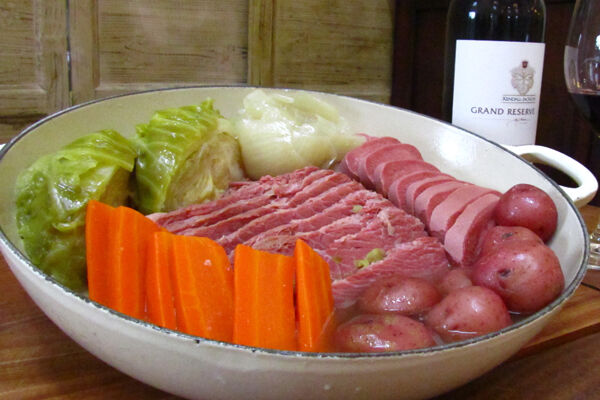
Corned Beef and Cabbage
Recipe Type:
Entree
Servings:
8
Ingredients
- ½ gallon water
- 1 cup kosher salt
- ½ cup brown sugar
- 1 cinnamon stick
- 4 bay leaves
- 1 tsp. whole black peppercorns
- 1 tsp. mustard seeds
- 10 allspice berries
- 10 juniper berries
- 10 cloves
- ¼ cup pink curing salt
- ½ gallon ice
- 1 (5-6 lb.) beef brisket
- 2 medium onions, peeled and quartered
- 6 carrots, peeled and cut in half
- 1 large head of cabbage, cut into 8 wedges
- 8 medium red-skinned potatoes, cut in half
Instructions
- Combine water, salt, sugar, spices and pink curing salt in a pot. Bring to a boil and let stand for 15 minutes. Transfer to a non-reactive container and add ice. Stir to cool. Place in refrigerator and cool to below 40⁰F. Add brisket and let cure for 14 days. Check daily to make sure the beef is submerged in the brine.
- After 2 weeks, remove the brisket from the brine and rinse under cold water. Place in a pot, cover with water. Bring to a boil and then reduce to a simmer. Skim off any foam and discard. Cook for 3 hours and then check for tenderness. Add the vegetables and cook for another 30 minutes or until tender. The corned beef should be tender, but not falling apart.
- Remove the corned beef and vegetables from the cooking liquid and slice the brisket thinly against the grain. Arrange vegetables and corned beef on a platter and serve.
What Wine Pairs with Corned Beef?
The rich, savory flavors of corned beef find a perfect complement in the bold and structured profile of Cabernet Sauvignon. The wine’s robust tannins cut through the saltiness of the beef, enhancing its meaty depth, while notes of dark fruit like blackberry and plum provide a delightful contrast to the dish's hearty texture. Cabernet Sauvignon's full-bodied nature and subtle spice elevate the flavor experience, making each bite and sip feel perfectly balanced.
Kendall-Jackson’s Grand Reserve Cabernet Sauvignon stands out as the ideal pairing with its premium craftsmanship and harmonious blend of dark fruit, spice, and a velvety finish. Sourced from top vineyards, this wine delivers exceptional quality with every bottle. Looking for a great Cabernet Sauvignon under $30? Check out our Vintner's Reserve Cabernet Sauvignon for a superb option. Not only does Kendall-Jackson excel with their Grand Reserve, but they also offer a wide variety of wines to suit any palate, including elegant Pinot Noirs, rich Chardonnays, and more. Whether you are exploring reds or whites, Kendall-Jackson’s portfolio reflects a commitment to excellence that enhances any meal.