
Share This
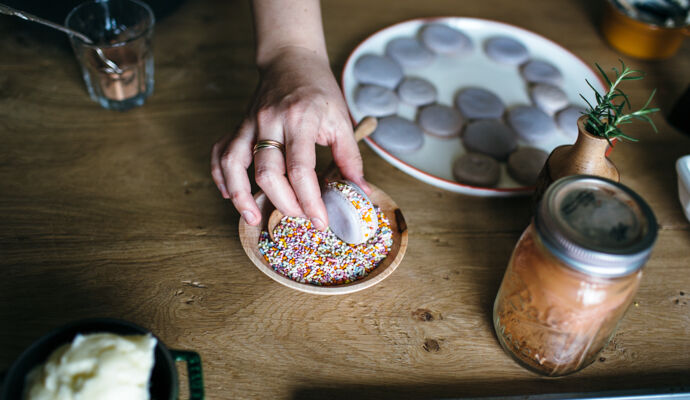
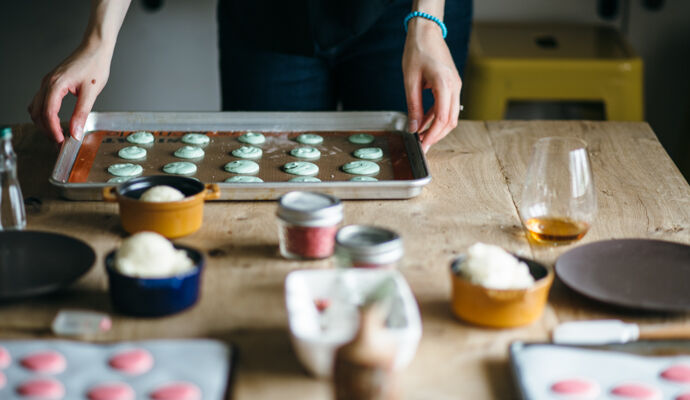
Hey everyone! It’s Molly from my name is yeh here and over the weekend, I threw a macaron making party for my friends because when you live in a tiny town with not a macaron in sight, that’s just what you gotta do! It was so much fun. We put on French music, ate French-inspired snacks, sipped Kendall-Jackson Late Harvest Chardonnay (which was a total hit), and piped out dozens of macarons. When the macaron shells were done baking, we each mixed our own magical concoctions of buttercream, with various extracts, food colorings, and spices, and then made delightful little sandwich cookies, complete with lots of sprinkles. It’s true, making your own macarons can be a bit of work, but when you’re doing it with friends, it truly is a party.
What Are Macarons?
Macarons are those delicate, colorful sandwich cookies that somehow manage to be crisp on the outside, soft and chewy on the inside, and utterly charming to look at. They’re made from almond flour, powdered sugar, and egg whites, filled with everything from classic buttercream to jam, chocolate ganache, or more inventive flavors.
Despite their reputation for being tricky, macarons are really all about patience, precision, and a little bit of love. Each shell needs to be just the right texture, and the filling has to balance sweetness without overwhelming the subtle almond flavor. The result is a tiny cookie that feels fancy, festive, and completely worth the effort. Perfect for parties, gifts, or just a midweek indulgence, macarons are a little piece of French magic you can make at home.
Why Homemade Macarons Are Worth the Effort
Making macarons at home might sound intimidating, but the payoff is absolutely delicious and rewarding. Unlike store-bought versions, homemade macarons let you control the flavors, colors, and fillings so every bite is exactly how you like it. There’s also something magical about pulling perfectly puffed, smooth-topped shells from your oven after a little patience and care.
Beyond taste, macarons make any gathering feel special. Whether you’re hosting a brunch, a tea party, or just treating yourself, the delicate shells and playful colors bring an extra layer of charm to the table. Plus, piping your own buttercream and customizing flavors gives you a sense of accomplishment that’s just as sweet as the cookies themselves.
Key Ingredients for Perfect Macarons
These are the essential ingredients that make macarons turn out beautifully. While the full recipe below has the precise amounts, knowing the main players will help you understand why macarons are so special.
- Almond flour – Provides a delicate, tender texture for the shells.
- Egg whites – Give structure, lift, and that signature macaron shape.
- Powdered sugar – Sweetens the shells and helps create a smooth surface.
- Granulated sugar – Stabilizes the egg whites when whipping.
- Butter – The base for the buttercream filling.
- Flavorings and extracts – Vanilla, almond, citrus, or any favorite extract for unique buttercream flavors.
- Mix-ins and toppings – Cocoa, sprinkles, spices, or fruit purees to personalize your macarons.
How to Make French Macarons
Making macarons takes a little patience, but following each step carefully will reward you with light, crisp shells and creamy fillings that impress every time.
- Prepare your baking sheets – Cover two sheets with parchment paper or a Silpat and set them aside.
- Mix the dry ingredients – Combine the almond meal and powdered sugar, then sift the mixture into a large bowl. Use a spatula or spoon to help any clumps through. Discard any leftover bits too large to pass through the sifter.
- Whip the egg whites – In a stand mixer with a whisk attachment, beat the egg whites and a pinch of salt until foamy. Gradually add the granulated sugar and increase the speed to medium-high until stiff peaks form. Fold in food coloring or extracts if using.
- Fold in the dry ingredients – Gradually fold the almond and sugar mixture into the whipped egg whites. Keep folding until the batter flows like thick cake batter.
- Pipe the macarons – Transfer the batter to a piping bag fitted with a plain tip. Pipe 1–1½ inch circles about an inch apart on the prepared baking sheets. Lift the sheets a few inches and drop them twice to release air bubbles. Let them sit at room temperature for 15 minutes to 1 hour until a thin skin forms.
- Bake the shells – Preheat the oven to 300°F. Bake the macarons for about 20 minutes, or until they lift easily from the parchment. Allow to cool completely.
- Prepare the buttercream – Beat together the butter, powdered sugar, and salt until smooth. Add any food coloring or mix-ins you like.
- Assemble the macarons – Pipe a dollop of buttercream onto half of the cooled shells, top with the remaining shells, and press gently. Roll in sprinkles if desired. Enjoy!
French Macarons
Recipe Type:
Dessert
Prep Time:
75 minutes
Cook Time:
20 minutes
Total Time:
95 minutes
Servings:
30
Ingredients
Shells
- 1½ c finely ground almond meal (I like the one from Bob's Red Mill)
- 2 c powdered sugar
- 4 egg whites
- a pinch of salt
- ¼ c granulated sugar
- a few drops of food coloring, optional
- ½ tsp of extracts of your choice
Buttercream
- 1½ c unsalted butter, softened
- 3 c powdered sugar
- a pinch of salt
- food coloring
- any desired mix-ins: extracts, cocoa powder, cinnamon, sprinkles, etc.
Instructions
- Cover two baking sheets with parchment or a Silpat and set aside.
- Mix together the almond meal and powdered sugar and then sift them into a large bowl. This is a super important step, but it can take a while. Use a spatula or spoon to help the mixture through the sifter. Sometimes not all of the mixture is small enough to pass through the sifter, so if you're left with two tablespoons or less of the mixture, you can discard it.
- In the bowl of a stand mixer fitted with a whisk attachment, beat the egg whites and salt until foamy. With the mixer on medium, gradually add the granulated sugar. Increase the speed to medium high and beat to stiff peaks. Beat in any food coloring or extracts you'd like and then stop the mixer.
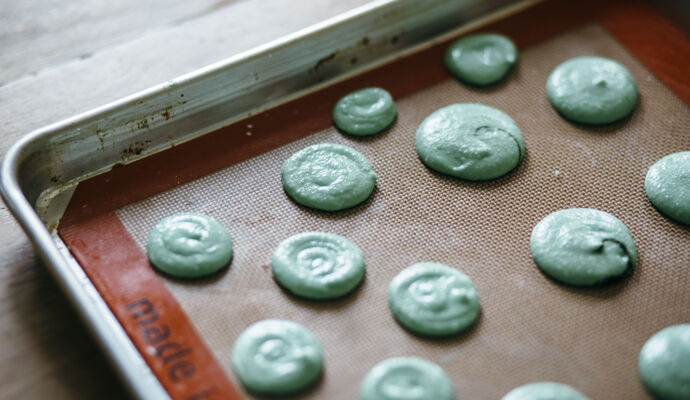
- Using a rubber spatula, gradually fold the dry mixture into the egg white mixture and keep folding until the mixture flows, almost like a thick cake batter. Pour the mixture into a piping bag fitted with a plain tip and then pipe 1-1½ inch circles, about an inch apart, onto your baking sheets. Pick the sheets up and then drop them from a few inches up back onto your work surface. Do this twice, to get the air bubbles out. Let these sit at room temperature for 15 minutes to an hour, until the tops form films on them and they are dry to the touch.
- Meanwhile, preheat your oven to 300.
- Bake your macarons for about 20 minutes, until they come easily off the parchment. Let them cool.
- To make your buttercream, beat together the butter, sugar, and salt. Add any desired food colorings and mix-ins.
- Fill a piping bag with buttercream and then pipe a dollop onto half of the cooled macaron shells. Top them with the other half of the shells. Roll them in sprinkles, if desired, and enjoy!
Common Macaron Mistakes and How to Avoid Them
Macarons are notoriously finicky, but most issues have simple solutions. Cracked shells often mean the batter was too dry or the oven temperature was too high. Hollow shells can result from over-whipping the egg whites or not folding the batter enough. Uneven baking usually comes from inconsistent oven heat or skipping the resting period before baking. To avoid these problems, always measure ingredients carefully, allow piped shells to rest until they form a thin skin, and monitor your oven closely.
Other common challenges include sticky bottoms or shells that spread too much. Using a silicone mat or parchment paper and giving your piped rounds enough space can prevent sticking and spreading. Patience is key—allowing the macarons to rest before baking ensures they develop the smooth, glossy tops and characteristic “feet.” A little practice and attention to detail will have you consistently producing delicate, picture-perfect macarons.
Storing and Serving Macarons
Macarons are best enjoyed fresh, but they can be stored to keep their delicate texture intact. For short-term storage, place them in an airtight container at room temperature for up to two days. For longer storage, keep them in the refrigerator for up to a week, but allow them to come to room temperature before serving so the flavors and textures are at their best.
If you want to prepare macarons ahead of time for a party or gifting, they also freeze beautifully. Arrange them in a single layer in an airtight container and freeze for up to a month. When ready to enjoy, let them thaw in the refrigerator for a few hours or at room temperature for about 30 minutes. Serving macarons slightly chilled can also enhance the creaminess of the filling while keeping the shells crisp, making them perfect for afternoon tea, brunch, or a dessert platter with sparkling wine.
Wine Pairings for Macarons
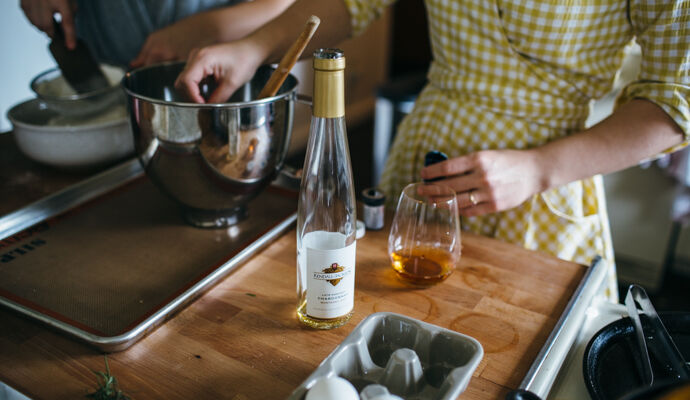
The delicate sweetness and airy texture of macarons call for wines that are equally refined. A late-harvest wine like Kendall-Jackson Late Harvest Chardonnay pairs beautifully with vanilla, caramel, or nut-flavored macarons, balancing the sugar with its rich, honeyed notes. For fruit-flavored macarons, especially berry or citrus varieties, a sparkling wine or a lightly sweet Riesling can bring out the brightness and refresh the palate between bites.
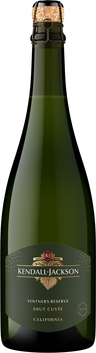
If you’re feeling celebratory, Kendall-Jackson sparkling wines offer a playful effervescence that complements the crisp shell and creamy filling. The Vintner's Reserve Brut Cuvée's gentle bubbles lift the flavors without overwhelming the subtle nuances of the macarons, making each bite feel like a miniature indulgence. Whether you’re hosting a macaron-making party or serving them as a sweet finish to a dinner, these wine pairings enhance the experience and showcase how thoughtful wine choices can elevate even the most delicate desserts.
FAQs
Do you need a stand mixer to make macarons?
A stand mixer makes achieving stiff peaks in your egg whites much easier, but a hand mixer can work too—it just takes a bit more patience and elbow grease.
Can macarons be made without almond flour?
Traditional macarons rely on finely ground almonds for texture and flavor, but some recipes swap in other nut flours like hazelnut or pistachio for a different twist.
How do you prevent macarons from cracking?
Cracks often happen if the shells are under-mixed or not rested long enough before baking. Letting them sit at room temperature until the tops form a thin skin is key.
Can macarons be made ahead of time?
Yes! You can bake shells in advance and freeze them, or assemble filled macarons and refrigerate for up to 3 days. Let them come to room temperature before serving.
What wine pairs best with macarons?
Light and sweet flavors match beautifully with Kendall-Jackson Late Harvest or sparkling wines. The delicate fruitiness complements both fruity and buttery buttercream fillings perfectly.