
Share This
Some appetizers punch way above their weight, and this one is right at the top of the list. Pinot Noir poached pears with creamy burrata on toasted baguette is one of those little bites that stops conversation for a second and gets everyone asking, "wait, what is this?" It looks fancy, it tastes incredible, and honestly, most of the magic happens on its own while the wine simmers away on the stove.
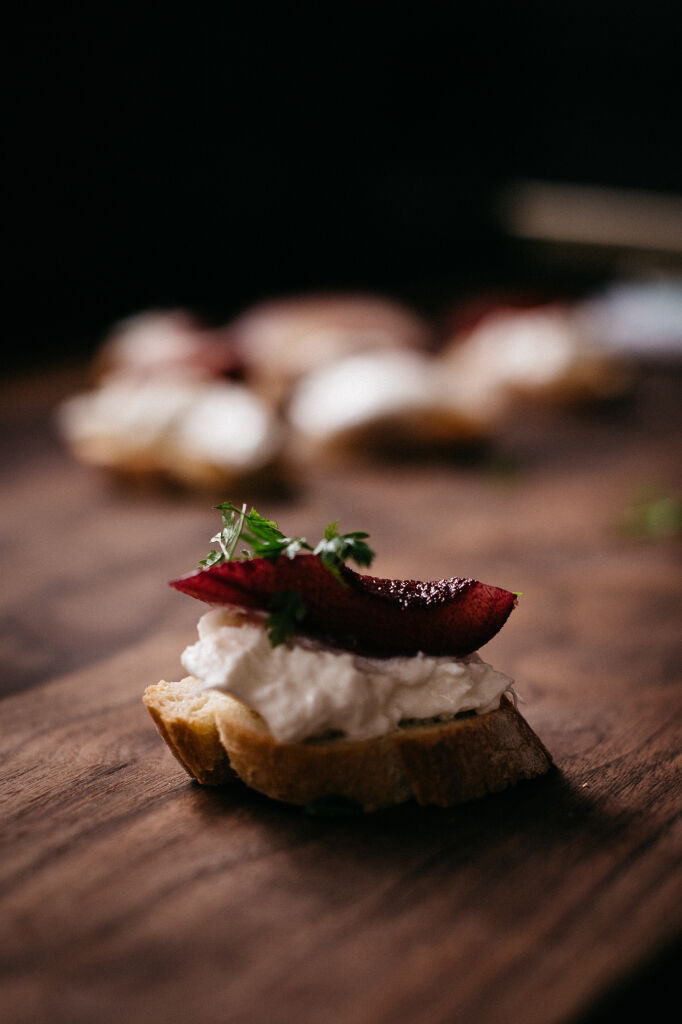
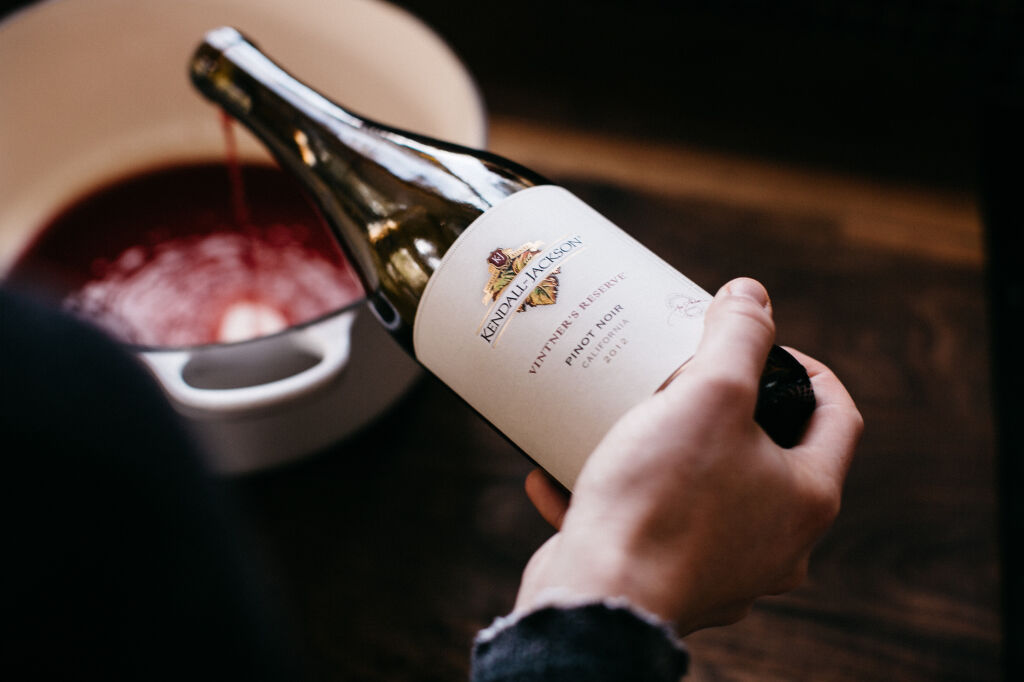
Here's the trick. Pour a bottle of Kendall-Jackson Vintner's Reserve Pinot Noir into a pot with some sugar, orange, thyme, and a few peppercorns, then let a couple of Bosc pears slowly simmer away until they turn tender and stained the prettiest deep ruby color. Slice them up, spoon a little burrata onto a warm crostini, and top with those jewel-toned pears. A sprinkle of chervil and a pinch of flaky sea salt at the end and honestly, it's kind of showing off.
Whether it's the opener at a dinner party, a fun addition to a snack board on a quiet Friday night in, or something to bring to a get-together with friends, these crostini always feel like a little moment. Pour a glass of the same Pinot Noir that's doing the work in the pot, gather everyone around, and enjoy every last bite.
What Are Poached Pears?
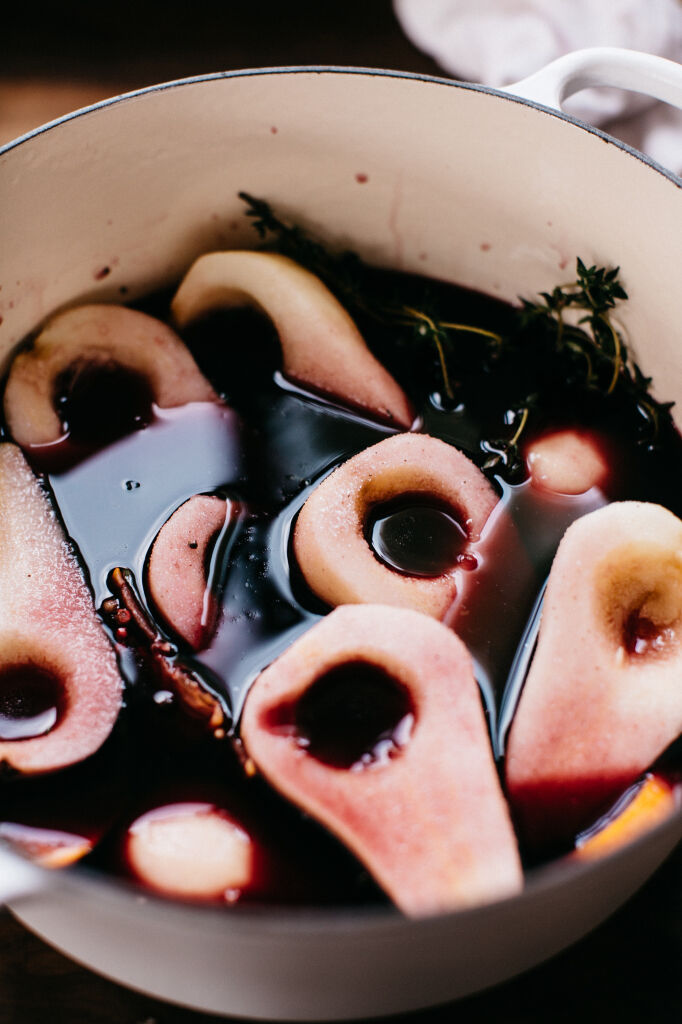
Poaching is one of those cooking techniques that sounds fancy but is actually really simple. It just means gently simmering something (in this case, pears) in a flavorful liquid until it turns soft and takes on all the flavors bubbling around it. The liquid can be wine, juice, tea, syrup, or a combination of a few of these, and the pears essentially drink it all in as they cook.
What makes this technique so beautiful for fruit is how transformative it is. Firm, everyday pears become tender, almost silky, and stained the most gorgeous jewel-toned color depending on what they're poached in. The flavor deepens too, picking up all the warm, aromatic notes from the poaching liquid, whether that's spice, citrus, herbs, or in this case, the bright red fruit character of Pinot Noir. In just about 30 minutes, a plain Bosc pear turns into something that feels like a special occasion.
Why Pinot Noir is the Perfect Wine for Poaching Pears
Not all red wines are created equal when it comes to poaching, and Pinot Noir might just be the gold standard. Its bright acidity, silky texture, and delicate red fruit character make it a natural match for the mellow, honeyed flavor of pears. Heavier reds like Cabernet Sauvignon or Syrah can overwhelm the fruit with big tannins and bold oak, but Pinot Noir has a lightness that lets the pears shine while still infusing them with beautiful color and flavor.
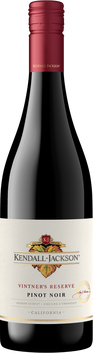
Kendall-Jackson Vintner's Reserve Pinot Noir is especially lovely for this recipe. Its notes of ripe cherry, raspberry, and a whisper of baking spice complement the sweetness of the pears while adding depth and warmth to the poaching liquid. As the wine reduces, all of those flavors concentrate into a rich, syrupy bath that turns the pears the most gorgeous deep ruby color. And because you'll want a glass of it in hand while you cook (and definitely one alongside the finished crostini), it does double duty as both the star of the recipe and the perfect pour to serve with it.
The Best Pears for Poaching
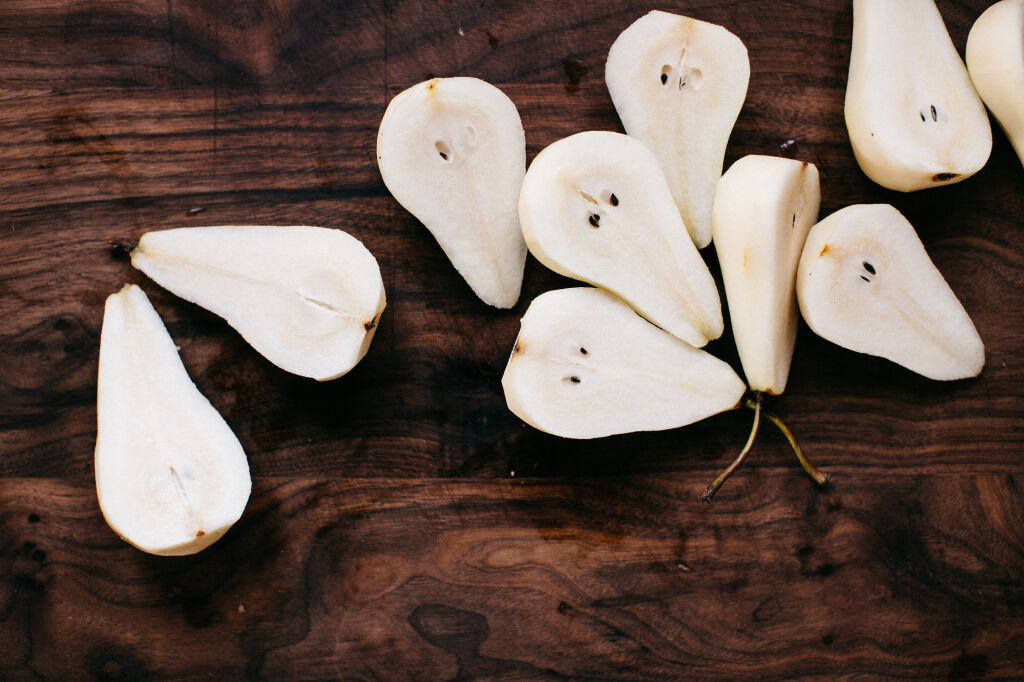
Not every pear is up to the job of poaching. The key is choosing a variety that's firm enough to hold its shape after simmering in wine for 30 minutes, but flavorful enough to really absorb everything happening in that pot. Here's a quick rundown of the top contenders:
- Bosc: The gold standard for poaching, and the star of this recipe. Bosc pears are firm, hold their shape beautifully, and have a lovely honeyed, slightly spiced flavor that pairs perfectly with Pinot Noir. Their elegant, elongated shape also makes them stunning when sliced and plated.
- Anjou: A great backup option if Bosc isn't available. Anjou pears are firm and mildly sweet, though slightly softer than Bosc. Look for green Anjou rather than red, since they tend to hold up a little better during poaching.
- Bartlett: Best used when they're just barely ripe. Bartletts are on the softer side, so they can turn mushy if left in the poaching liquid too long. If Bartlett is what you have, reduce the simmering time by about 10 minutes and keep an eye on them.
- Comice: Beloved for their sweetness and buttery texture, but they're the most delicate of the bunch. Comice pears can work in a pinch but will turn very soft quickly, so they're best for shorter poaches or served whole rather than sliced.
- Forelle or Seckel: These small, cute pears aren't as common but make gorgeous individual servings when poached whole. Their firm texture holds up well, and they look adorable on a cheese board.
The bottom line? When in doubt, go for Bosc. They're widely available, gorgeous when sliced, and practically made for this recipe.
Pinot Noir Poached Pears & Burrata Crostini Recipe
Recipe Type:
Appetizer
Prep Time:
25 minutes
Cook Time:
45 minutes
Total Time:
70 minutes
Servings:
8
Ingredients
- 4 Bosc pears
- 2 springs thyme
- 1 tbsp peppercorns
- 1 tbsp salt
- 1 orange, segmented
- ½ cup sugar
- 3 cups Vintner's Reserve Pinot Noir
- 2 cups burrata
- 1 baguette, sliced and toasted
- chervil, for garnish
- flaky sea salt, for garnish
Instructions
- Pour wine into the basin of a large pot with lid. Add oranges, sugar, thyme, sugar, salt, and peppercorns. Stir to combine.
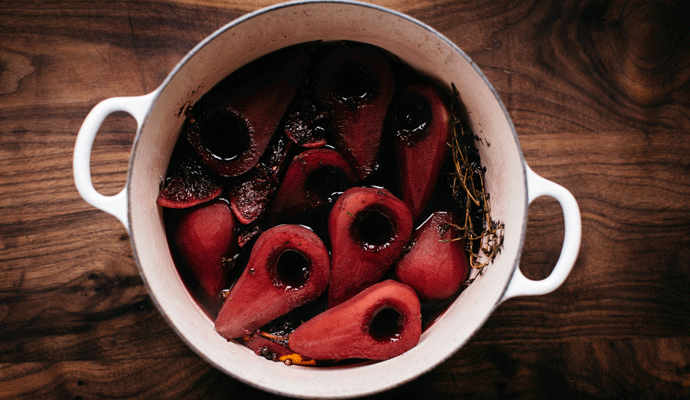
- Peel and halve pears. Carve out seeds with a spoon. Add to the wine mixture in the pot. Cover and simmer over medium heat for 30 minutes. Pears are ready tender when pierced with knife.
- Preheat the oven to 350' F. Slice baguette into half inch toasts. Spread on a baking sheet and drizzle with olive oil. Toast for 15 minutes.
- To assemble, spread a tablespoon of burrata onto a piece of toast. Slice pear halves into bite-sized pieces and place atop the bread and cheese. Garnish with chervil. Repeat and assemble enough to serve your crowd. You may have leftover pears. They can be kept for 3 days in the refrigerator and used in a wide variety of other dishes from salads to grilled sandwiches.
What to Do with Leftover Poached Pears
The recipe usually leaves you with a few extra poached pears, and honestly, that's a very good problem to have. These jewel-toned beauties are ridiculously versatile and can turn just about any dish into something a little more special. Here are some of the best ways to put them to use:
- Toss them into a salad. Slice the pears and add them to a bed of arugula or mixed greens with crumbled blue cheese, candied walnuts, and a simple vinaigrette. Instant elevated lunch.
- Layer them onto grilled cheese. Add a few slices to a grilled cheese sandwich with sharp cheddar, brie, or gruyere for a sweet-savory twist that feels straight out of a wine bar.
- Spoon them over vanilla ice cream. Drizzle a little of the poaching liquid on top and suddenly dessert is done. Bonus points for a sprinkle of toasted pistachios or almonds.
- Fold them into oatmeal or yogurt. A few chopped poached pears turn a regular breakfast into something that feels like a treat. Add a drizzle of honey and a pinch of cinnamon and you're golden.
- Add them to a cheese board. Poached pears look absolutely stunning next to a wedge of brie, some blue cheese, honey, nuts, and cured meats. They add color, sweetness, and a fun conversation starter.
- Bake them into a galette or tart. Layer slices of poached pear over puff pastry with a smear of goat cheese or almond cream, bake until golden, and you have a beautiful dessert or brunch centerpiece.
What Wines Pair Best with Poached Pear and Burrata Crostinis
This crostini is one of those appetizers that basically demands a glass of wine, and the good news is that a few Kendall-Jackson varietals absolutely shine alongside it. Kendall-Jackson Vintner's Reserve Pinot Noir is the natural first pour, since it's already doing the heavy lifting in the poaching liquid. Its bright red fruit, silky texture, and soft tannins mirror the flavors of the pears while playing beautifully off the creamy burrata and warm baguette. Cook with it, serve with it, and it all comes full circle.
For a slightly more elegant pairing, Kendall-Jackson Grand Reserve Pinot Noir takes things up a notch. Its layered notes of black cherry, cola, and a whisper of spice add extra depth and elegance, making it a beautiful pour for a dinner party or a special occasion. If white wine is more the mood, Kendall-Jackson Vintner's Reserve Chardonnay is a lovely alternative. Its bright acidity and notes of tropical fruit and citrus cut through the richness of the burrata while complementing the sweetness of the pears, creating a fresh, balanced pairing that's perfect for a lighter appetizer spread.