
Share This
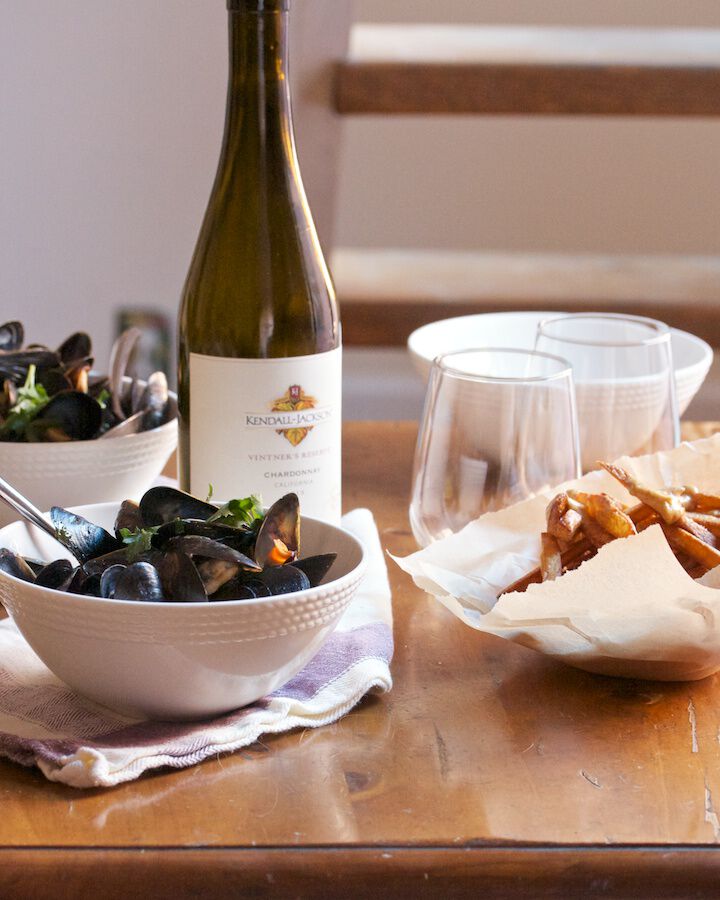
There is a particular kind of romance that lives inside a pot of mussels. It has less to do with the ingredients, which are humble by design, and more to do with the pace of the meal. Moules-frites is a dinner that refuses to be rushed. You slip mussels into a simmering bath of Kendall-Jackson Vintner's Reserve Chardonnay, garlic, and parsley, and while they open one by one, a batch of golden frites crisps up in a nearby pot of oil. When everything finally lands on the table, the shells become spoons, the wine in the glass matches the wine in the broth, and dinner turns into the kind of long, unhurried evening that feels quietly extravagant. Whether you are cooking for Valentine's Day, a Friday night in, or the sort of dinner party where guests happily gather around the stove, this is a recipe that rewards a little patience with a great deal of joy.
What Are Moules-Frites?
Moules-frites is the kind of dish that sounds fancier than it is. At its heart, it's a big pot of mussels steamed in white wine, garlic, and herbs, served alongside a heap of golden, twice-fried potatoes. The name is French, but the dish is claimed just as passionately by Belgium, where it's considered something close to a national treasure. Walk into almost any bistro in Paris or Brussels on a weeknight and you'll find it on the menu, usually arriving at the table in a steaming enameled pot with a paper cone of frites tucked in beside it.
Part of the appeal is how quickly a humble pile of shellfish transforms into something celebratory. Mussels are inexpensive, potatoes are pantry staples, and the whole meal comes together in under an hour. What makes it feel like an occasion is the ritual of eating it: prying open shells, dragging frites through the broth, refilling wine glasses between bites. It's a dinner that asks you to slow down, and that's exactly why home cooks have embraced it as their own.
Key Tips for Cleaning and Prepping Mussels
Mussels are one of the easiest proteins to cook, but they do ask for a little care before they hit the pot. A few extra minutes at the sink is the difference between a broth that tastes clean and briny and one that tastes gritty. The good news is that the process is straightforward once you know what to look for.
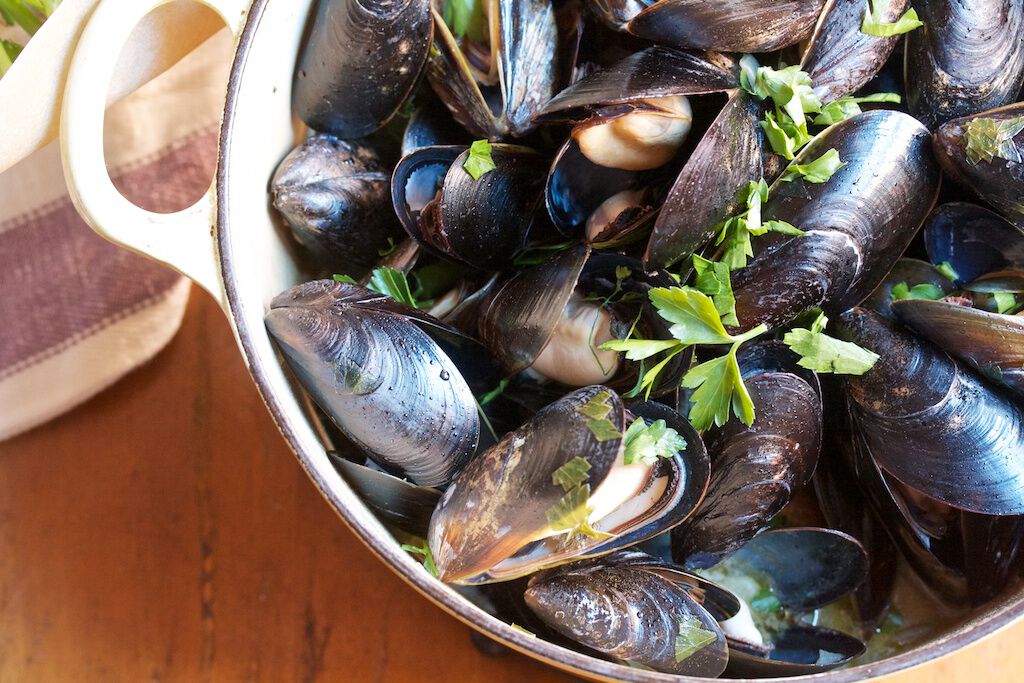
Start by giving the mussels a quick inspection. Fresh mussels should smell like the ocean, not fishy, and their shells should be tightly closed. If a shell is open, give it a gentle tap on the counter. If it closes within a few seconds, it's still alive and good to cook. If it stays open or the shell is cracked, toss it.
From there, a few simple steps will get them table-ready:
- Rinse them in cold water. Place the mussels in a colander and run cold water over them, giving them a gentle toss with your hands. This washes away loose sand, seaweed, and any debris clinging to the shells.
- Scrub the shells. Use a stiff brush or a clean scouring pad to scrub off barnacles, grit, or stubborn spots. You don't need to be aggressive, just thorough.
- Remove the beard. The beard is the wiry, brown tuft poking out from the seam of the shell. Grip it firmly between your thumb and a paring knife and pull it toward the hinge of the mussel, not toward the opening. A quick, decisive tug works best.
- Give them one more rinse. After scrubbing and de-bearding, run the mussels under cold water one last time to wash away anything you loosened during prep.
- Keep them cold until you cook. Mussels are alive right up until they hit the pot, so store them in a bowl loosely covered with a damp paper towel in the coldest part of your refrigerator. Skip the airtight container, since they need to breathe.
A quick word on timing. Mussels are best cooked the same day you buy them, and ideally within a few hours of prepping. If you clean them too far in advance, they can start to lose their brininess and freshness.
Why Chardonnay Is the Best Wine for Moules-Frites
Chardonnay and mussels are one of those pairings that feels almost inevitable once you taste it. The briny sweetness of the shellfish needs a wine with enough acidity to keep things bright, enough body to stand up to butter and garlic, and enough character to be worth pouring twice: once into the pot and once into your glass. Kendall-Jackson Vintner's Reserve Chardonnay checks every box.
The wine's crisp acidity cuts cleanly through the richness of the broth, while notes of tropical fruit, citrus, and green apple echo the natural sweetness of the mussels themselves. A gentle touch of oak adds a subtle roundness that softens the sharpness of the garlic and lets the parsley shine. When the wine reduces in the pan, it concentrates into a broth that tastes layered and complete, the kind you'll want to spoon up long after the last mussel is gone.
Pour the same bottle into your glass and the meal becomes a conversation between the pot and the pour. Every sip refreshes the palate and gets it ready for the next bite, which is exactly what a great pairing should do.
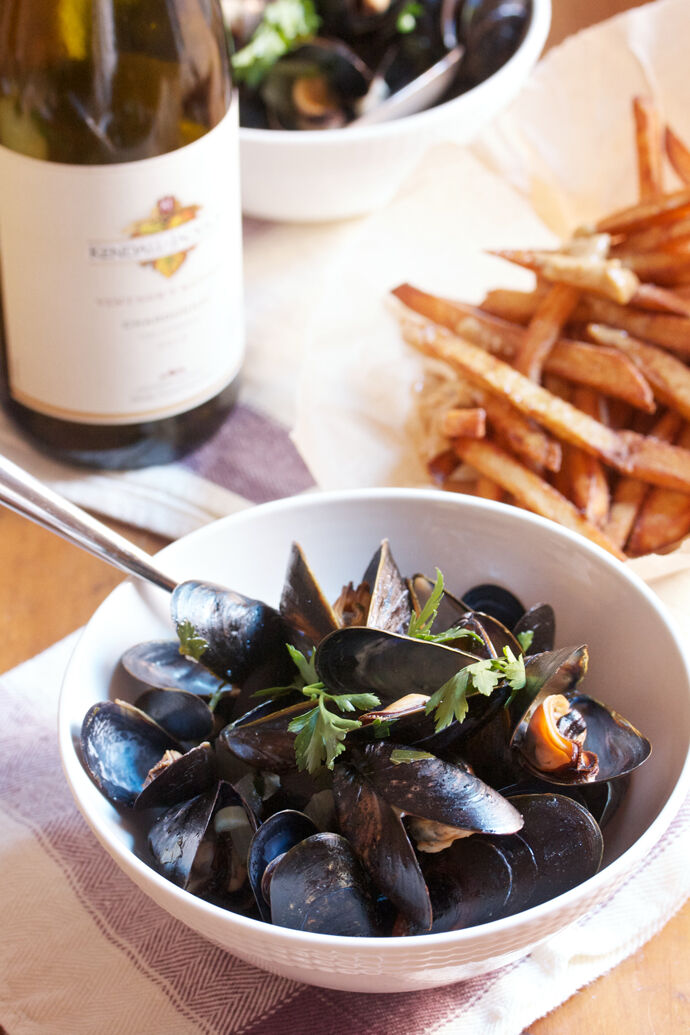
Moules Frites
Recipe Type:
Entree
Prep Time:
25 minutes
Cook Time:
20 minutes
Total Time:
45 minutes
Servings:
2
Ingredients
For the mussels:
- 2 tablespoons olive oil
- 1 small onion, chopped
- 3 cloves garlic, peeled and thinly sliced
- Half bunch of parsley, chopped
- ¼ teaspoon salt
- ½ cup Vintners Reserve Chardonnay
- 2 pounds mussels, scrubbed and de-bearded
For the French fries:
- 2 tablespoons cider or white vinegar
- 1 large baking potato
- 1½ quarts peanut oil
- ¼ cup mayonnaise
- a few pinches smoked paprika
- juice of half a lemon
Instructions
Make the mussels:
- Heat the olive oil in a large lidded pot or Dutch oven over a medium-high flame. Sauté the onion until soft and translucent, about 3 minutes. Add the garlic and salt, and sauté for another minute or so, until very fragrant. Throw in most of the parsley and cook for 1 minute. Add the wine and simmer for a minute or so, until some of the alcohol has burned off, then gently pile in the mussels. Turn the heat to low, cover the pot, and cook until the mussels have opened, about 5 minutes, depending on the size of your mussels. Garnish with parsley, and serve immediately straight from the pot.
- (If your fries aren't done yet, you can leave the mussels, covered, off the heat, until you're ready to eat.)
For the fries:
- Peel the potato and cut them into fries–about 4″ by ¼″ by ¼″. Place them in a bowl and fill to cover with water. Add the vinegar and mix around. Leave for about 10 minutes, while you heat the oil. When ready to cook, rinse the potatoes in a few more washes of cold water, then pat them dry with paper towels.
- To get ready to fry, line a baking sheet with paper towels.
- Heat the oil in a small, tall pot over high heat. When the oil reaches 350°F, it's time to fry. (If you don't have a thermometer, here's what to do: when the oil starts to shimmer, add a small fry. When this fry sizzles, that means you're ready). Turn the heat down slightly, and cook the fries for 1 minute, until very barely golden.
- Scoop out with a slotted spoon to a paper towel and take the oil off the heat. You can do this up to several hours ahead of time.
- When you're ready to actually eat dinner, heat the same oil up to 350°F. Return the fries to the oil and cook for 4 minutes, until golden and crisp. Scoop them back out to the waiting paper-towel lined sheet and salt generously before serving.
- Prepare the dip by combining the mayo, paprika, and a squeeze of lemon juice in a small bowl. Dollop on or beside the fries.
How to Pair Moules-Frites with Wine
The classic answer is white wine, and for good reason. Mussels are delicate, briny, and just a little sweet, which means they pair best with wines that bring brightness and freshness to the table rather than weight. The broth matters too. Because moules-frites is built on a foundation of white wine, garlic, and herbs, the wine in your glass should feel like a natural extension of what's already in the pot.
Kendall-Jackson Vintner's Reserve Chardonnay is the pairing we reach for first. Its crisp acidity, notes of tropical fruit and citrus, and gentle touch of oak echo the flavors of the broth while cutting through the richness of the frites. It's the bottle we recommend pouring into the pan and into your glass, since cooking with the same wine you're drinking keeps the whole meal in harmony.
That said, moules-frites is a surprisingly flexible dish, and a few other Kendall-Jackson varietals bring their own personality to the table.
- Kendall-Jackson Grand Reserve Chardonnay leans a little richer and more layered than the Vintner's Reserve, with deeper notes of baked apple, lemon curd, and toasted oak. It's a beautiful choice if you're serving moules-frites as part of a longer dinner or leaning into a cheese course afterward.
- Kendall-Jackson Vintner's Reserve Sauvignon Blanc is the pick for anyone who wants their pairing to skew crisp and herbaceous. Its zippy acidity and notes of grapefruit, lime, and fresh-cut grass practically mirror the parsley and lemon in the dish, making every bite feel bright.
- Kendall-Jackson Vintner's Reserve Pinot Gris offers a softer, more floral option. With flavors of pear, honeysuckle, and a whisper of minerality, it's a lovely match for the sweetness of the mussels and works especially well if you're serving the dish on a warmer evening.
- Kendall-Jackson Vintner's Reserve Rosé is the wildcard, and a very welcome one. Dry, delicate, and full of strawberry and citrus notes, it brings a little romance to the table and looks beautiful next to a steaming pot of mussels. Ideal for Valentine's Day or a spring dinner on the patio.
If you're leaning toward red, keep it light. A chilled Pinot Noir with low tannins and bright red-fruit character can work, especially if your broth includes tomato or a touch of cream. Skip anything big, oaky, or heavily tannic, since those wines will overwhelm the delicate flavor of the mussels.